Series finales dominate this week — Lions Led By Donkeys closes out Iwo Jima, Holland wraps Bruneval, and Harris kicks off Guadalcanal alongside Rest Is History's strong WWI 1915 run. The Pick goes to the Iwo Jima conclusion, which earns it by refusing to let the flag-raising be the whole story.
🎯 This Week's Pick
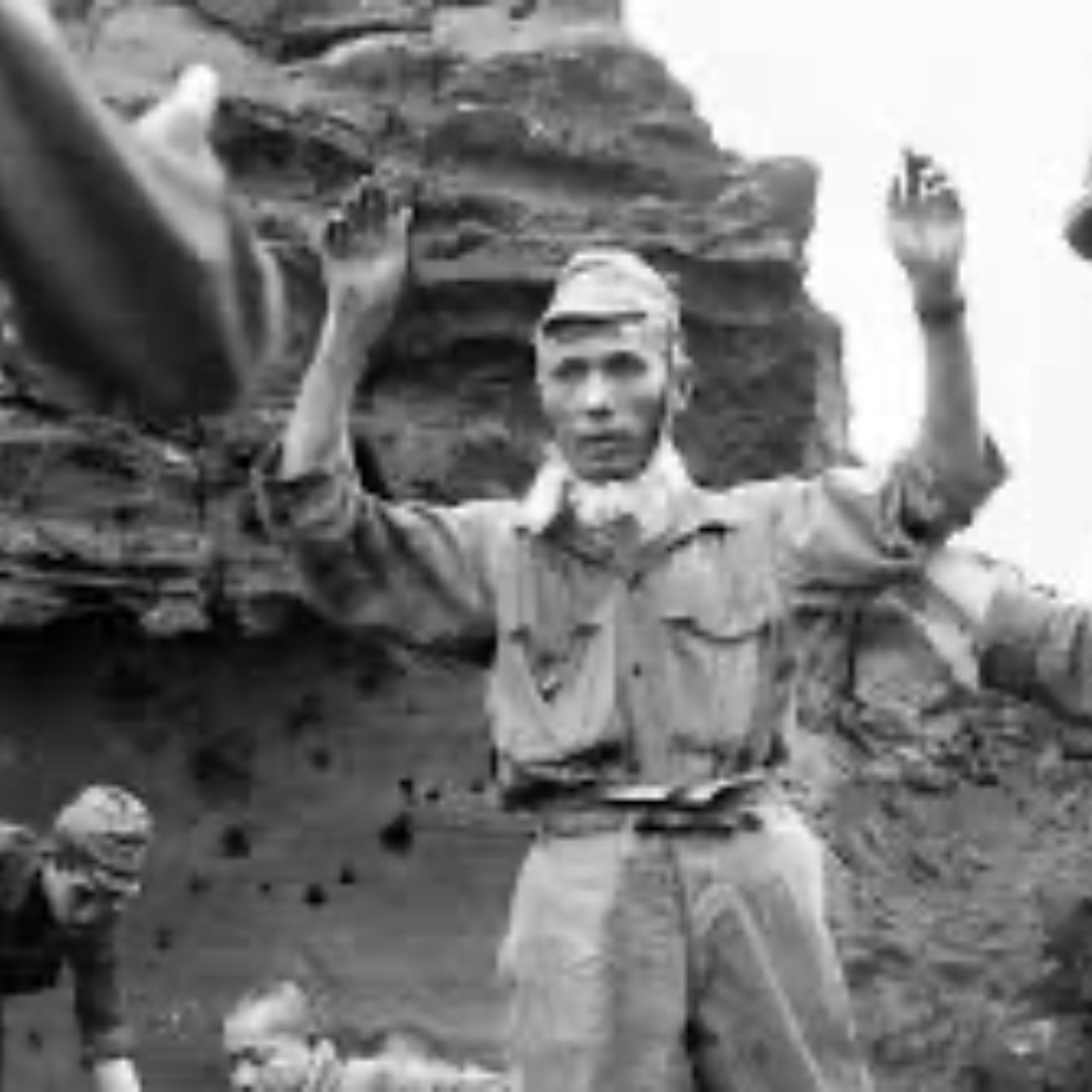
Episode 414 - The Battle of Iwo Jima: Part 3
Lions Led By Donkeys · 1h25m · May 18
Peter Crean & Luke Robinson — Lions Led By Donkeys
World War IITactics & BattlesFortification & Siege
The Lions Led By Donkeys crew concludes their Iwo Jima series with 85 minutes on the gruelling later phases of the battle — the attritional cave-by-cave fighting after the flag-raising spectacle, and the question of whether the island was worth the 26,000 American casualties. This finale earns its weight precisely because the series format gives it the space to go beyond the iconic imagery and into the grim tactical reality of reducing Kuribayashi's defensive network, delivering a payoff that standalone episodes on Iwo never manage. The podcast's signature irreverence works here because it cuts through the mythologising that usually surrounds Iwo.
🔴 Essential
Heist From The Sky: Hell Breaks Loose (Part 3)
We Have Ways of Making You Talk · 39:56 · May 20
James Holland — WWII historian, author of Normandy '44 & Al Murray
World War IITactics & BattlesIntelligence & Espionage
Holland and Murray wrap up their Bruneval Raid series with the sharp end — the German response, the absence of heavy weapons support for C Company, and the Royal Navy extraction under fire. Good operational detail on a textbook combined-arms raid that's often oversimplified into 'paratroopers steal radar.' Short at 40 minutes but the three-part structure means this closing instalment lands with cumulative weight that a one-off retelling of Bruneval could never carry.
Heist From The Sky: The Raid Begins (Part 2)
We Have Ways of Making You Talk · 36:22 · May 18
James Holland — WWII historian & Al Murray
World War IIIntelligence & EspionageTactics & Battles
The middle instalment covers the intelligence preparation and paratrooper training behind Operation Biting — how the RAF reconnaissance photos and French Resistance intelligence shaped the plan, and why the Würzburg radar site was so lightly defended. Holland is strong on the interplay between intelligence and operational planning. Best consumed as part of the three-episode run.
Episode 627-Interview with Dave R. Holland
The History of WWII Podcast · 54:41 · May 22
Dave R. Holland — author of Guadalcanal: The Pivotal Battles of the Matanikau Front
World War IIStrategy & Grand StrategyTactics & Battles
Ray Harris Jr. brings on Dave Holland, author of a detailed study of the Matanikau front on Guadalcanal, to open what promises to be another sustained multi-part campaign — the podcast's coverage of Operation Watchtower. The conversation gets into why the US chose Guadalcanal as its first Pacific offensive — the strategic logic of denying Japan its southern perimeter and protecting the Australia lifeline. At 55 minutes with an author who's done granular research on the ground fighting, this is a proper introduction to one of the war's defining campaigns.
672. The First World War: Italy’s Doomed Campaign (Part 2)
The Rest Is History · 1h11m · May 20
Tom Holland & Dominic Sandbrook
World War ITactics & BattlesStrategy & Grand Strategy
Holland and Sandbrook tackle Italy's entry into WWI in 1915 and the catastrophic Isonzo campaigns against Austria-Hungary — eleven battles on the same front with appalling casualties and almost no ground gained. The pair are good on the political delusions that led Italy to join the Allies and the mismatch between ambitions and military capability. Over an hour and genuinely focused on the fighting, which lifts this above the usual Rest Is History treatment of military topics.
671. The First World War: Blood in the Trenches (Part 1)
The Rest Is History · 1h24m · May 17
Tom Holland & Dominic Sandbrook
World War ITactics & BattlesWeapons & Technology
Holland and Sandbrook on the Western Front in 1915 — trench life, the German attempt to break the stalemate early, and the first use of poison gas at Ypres. At 84 minutes, this is unusually long for Rest Is History and the military focus is sustained throughout. The description of shelling and the industrial escalation of the war is well handled, with Sandbrook in particular bringing the human cost into sharp focus.
🟡 Selections
Episode 626-Operation Watchtower Begins
The History of WWII Podcast · 23:12 · May 19
Ray Harris Jr. — independent WWII historian
World War IITactics & Battles
The Marine landings on Guadalcanal and Tulagi in August 1942 — the opening moves of Watchtower and the anticipation of the Japanese counterstroke. Brief at 23 minutes but directly on the fighting.
From Ivory Tower to Iron Curtain: The Academics Who Reshaped the CIA
SpyCast · 36:45 · May 19
Dr Andrew Hammond — historian, International Spy Museum
Cold WarIntelligence & Espionage
How Ivy League academics were recruited into the CIA after early intelligence failures, transforming analytical tradecraft during the Cold War. Andrew Hammond and this episode are strongest on the institutional mechanics of intelligence reform rather than specific operations.
AWA410 - What role and status did trumpeters have in warfare?
Ancient Warfare Podcast · 11:01 · May 22
Murray Dahm — editor, Ancient Warfare Magazine
AncientWeapons & Technology
Murray Dahm on battlefield signal instruments in the ancient world, keyed to the 2026 Thetford carnyx discovery. Niche but genuinely military — just very short at 11 minutes.
📅 The Thetford carnyx discovery in early 2026 — only the third found in Britain — is the direct prompt.
📚 Reading List
Guadalcanal: The Pivotal Battles of the Matanikau Front — Dave R. Holland
Dave Holland joins the History of WWII Podcast to kick off their Guadalcanal coverage, and his book zeroes in on the brutal Matanikau River engagements that shaped the campaign's outcome — a properly detailed operational history of fighting that often gets glossed over in broader Pacific War accounts.
Via: Episode 627, The History of WWII Podcast
📖 AmazonThe Intelligence Intellectuals — Peter Grace
Peter Grace's book traces how Ivy League academics were brought into the early CIA to overhaul its analytical tradecraft after a string of Cold War intelligence failures. It's the subject of his SpyCast interview and a sharp look at how academic thinking got weaponised for national security.
Via: From Ivory Tower to Iron Curtain, SpyCast
📖 AmazonThe Bruneval Raid: Stealing Hitler's Radar — George Millar
Al Murray and James Holland are deep into their series on Operation Biting — the 1942 paratrooper heist that snatched German radar technology from the French coast. George Millar's classic account remains the go-to book on the raid, covering the planning, the drop, and the chaotic naval extraction.
Via: Heist From The Sky series (Parts 2 & 3), We Have Ways of Making You Talk
📖 AmazonThe White War: Life and Death on the Italian Front 1915–1919 — Mark Thompson
Tom and Dominic's Rest Is History series on Italy's catastrophic WWI campaigns covers exactly the ground Mark Thompson walks here — the political delusions that dragged Italy into the war and the horrifying Isonzo battles that followed. It's the English-language standard on a front that deserves far more attention.
Via: The First World War: Italy's Doomed Campaign (Parts 1 & 2), The Rest Is History
📖 Amazon
If a friend would find this useful, send them the link. That’s the entire growth strategy.